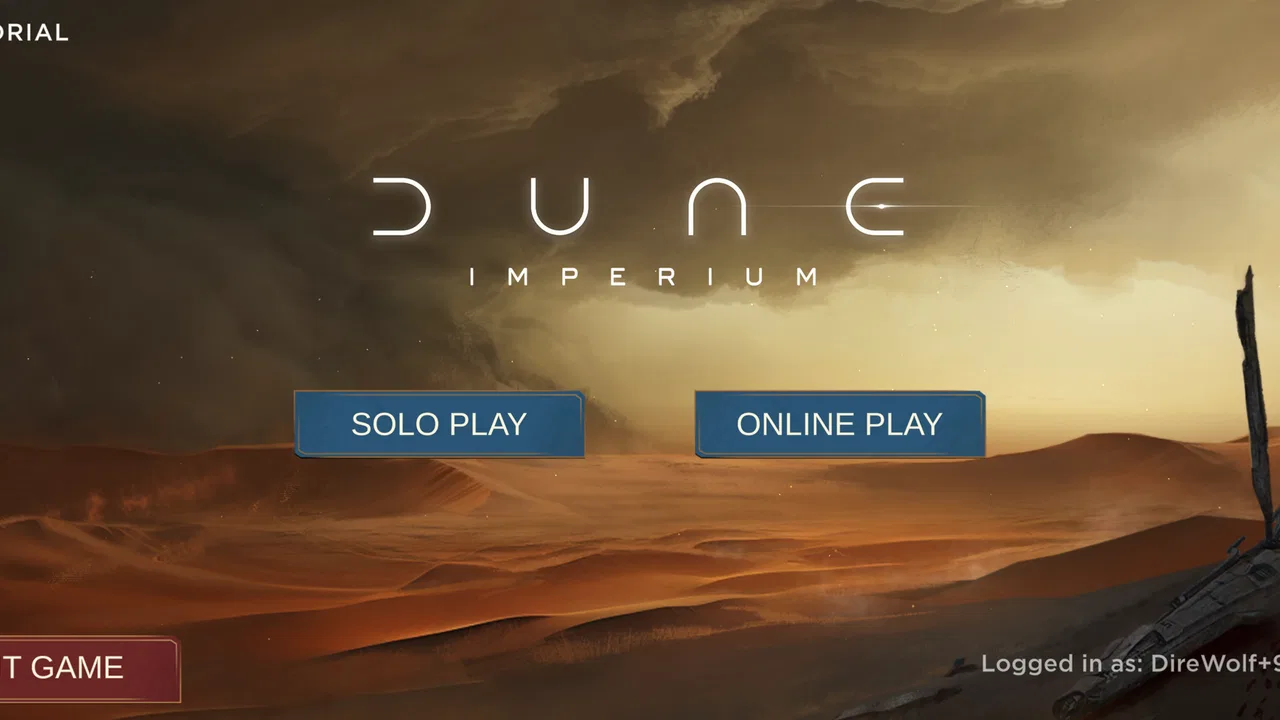
Dune: Imperium Digital
- 4.9
- Rating
- 50.00K
- Installs
- $10.99
- Price

 Analysis by App-foxy
I spent time with Dune: Imperium Digital as a serious strategy board game rather than a quick mobile distraction, and that distinction matters from the first session. This is a digital adaptation of the Dune: Imperium tabletop experience, built around political maneuvering, resource management, deck-building, and carefully timed worker placement. It asks you to think several turns ahead while still reacting to the plans of rival factions. When a round goes well, I feel as though I have created a clever chain of decisions rather than simply collected points.
The game comes from Dire Wolf Digital, a developer with a clear understanding of how to translate a complex board game into a touch-friendly format. The result is aimed at players who enjoy strategy with meaningful consequences, not people looking for a relaxed game that can be learned in a minute. Its Everyone 10+ rating makes it broadly approachable in terms of age, but the rules and decision density are more demanding than that label might suggest.
How the digital version turns Dune politics into a strategy game
The central appeal is the way several familiar board-game ideas overlap. You build a deck, send agents to useful locations, compete for influence, gather resources, and pursue victory points through a mixture of planning and opportunism. Each choice usually serves more than one purpose. A card may help you reach a location now, improve your future deck, support a faction, or create a stronger end-of-round position. The difficult part is deciding which benefit matters most before your opponents change the situation.
You May Also Like

 Blood Strike: 2.5 Anniversary
Blood Strike’s Loadouts Turn Every Drop Into a Tactical Gamble
A close look at Blood Strike’s custom loadouts: how fast access to signature weapons reshapes its battle royale rhythm, rewards preparation, and narrows the gap between fights.

 Pandora - Music & Podcasts
Pandora’s Music Is Easy to Start, but Harder to Recover
Pandora’s strength is its low-effort path from a seed to a station. Its weak spot is how much confidence it asks you to place in connection, setup, and quiet recovery.

 8 Ball Pool
 Is Built on Rivalries, Rematches, and Routine
A close look at the rivalries, rematches, shared routines, and unanswered safety questions that turn a quick pool match into a persistent mobile community.

 Samsung Music
’s Quiet Strength Is Playing What You Already Own
Its reach comes less from spectacle than from dependable access to a personal library. That simplicity is both the app’s strongest retention engine and its ceiling.

 AccuWeather: Weather Radar
AccuWeather Review: A Quick, Clear Forecast for Everyday Decisions
For everyday plans, the best forecast is the one you can understand quickly. AccuWeather makes rain timing, radar, and local conditions easy to act on, with a few trade-offs.

 Hill Climb Racing
Why Hill Climb Racing Still Turns Crashes Into One More Run
A tiny car, a bumpy hill and one more upgrade: Hill Climb Racing keeps resurfacing because its simple chaos makes every near-miss feel personal.
More From Our News Desk
View All News


That layered structure gives every turn a satisfying tension. I often begin a round with a neat plan, only to discover that the space I wanted has been taken or that another player has pushed a faction conflict in an unexpected direction. Instead of making the game feel random, these interruptions force me to value flexibility. A hand that looks slightly weaker on paper can be better if it leaves room to respond.
The Dune setting is not merely decoration around a generic card game. The struggle for influence, the importance of resources, and the constant pressure to balance immediate gains with long-term positioning all fit the source material. Even when I am focused on mechanics, the decisions still feel connected to the larger political contest. That atmosphere is one reason the game stands apart from simpler digital board games.
The first sessions require patience
I would not recommend judging the game after only a few minutes. The opening tutorial or introductory experience can explain the basic actions, but understanding why one option is stronger than another takes several rounds. New players need time to recognize which cards are worth keeping, when to commit to a faction, and how aggressively to pursue conflict rewards.
The interface helps by presenting the board and available actions in a clean digital format, yet the quantity of information can still feel heavy. I sometimes pause before confirming a move because the best choice depends on cards, resources, faction positions, and what opponents may still be able to do. That pause is part of the appeal for strategy fans, but it can feel like friction if you expected a fast board-game conversion.
My practical advice is to treat the first games as lessons rather than tests. Try different approaches instead of chasing a perfect result. One useful exercise is to compare a round where you spend resources early with one where you preserve them for a stronger late move. This makes the economy easier to understand than simply copying an experienced player’s strategy.
Why the digital format is useful
Playing digitally removes much of the setup and bookkeeping that can slow a physical board game. The game can track resources, card effects, faction progress, and scoring while I concentrate on the decisions themselves. That is especially valuable when learning, because I can focus on why an action works instead of checking whether every small calculation was handled correctly.
The format also makes the game easier to revisit. A physical copy may require a clear table, several players, and enough time to organize everything. Here, I can open the game when I have the opportunity and continue building familiarity with its systems. It is a good fit for someone who likes board games but does not always have a group ready to play.
There is a trade-off, however. Digital convenience can make the experience feel less social than sitting around a table. The tension is still present, especially against thoughtful opponents, but the conversation, physical card handling, and shared reactions are missing. I see this as a companion to the tabletop experience rather than a complete replacement for it.
Playing well means managing more than one plan
A common beginner mistake is to focus on a single attractive objective and ignore the rest of the board. I found better results by preparing a primary plan and a fallback. If I wanted to gain influence with one faction, I still considered whether my cards could support another location or whether a conflict reward might be more valuable. This habit prevents a blocked action from ruining an entire round.
Another useful insight is that deck-building is not automatically about adding as many powerful cards as possible. A larger deck can make key cards appear less often, while a modest improvement to consistency may be more useful than a flashy effect. I learned to judge new cards by how well they fit my existing approach, not just by their individual strength.
Timing also matters more than it first appears. Acting early can secure an important location, but acting late provides more information about what opponents are trying to do. I often prefer to keep one adaptable option available until the board becomes clearer. That choice can look conservative, yet it protects me from committing resources to a plan that another player has already made inefficient.
What the cost means for a new player
The listed price is $10.99, so this is a paid game rather than a free download that depends entirely on optional spending. That makes the purchase decision straightforward in one sense: the main question is whether this particular strategy experience deserves the upfront cost for you. There are also in-app purchase items priced from $9.99 to $10.99 each, so anyone comparing the game with completely free board-game alternatives should take those additional purchase options into account.
I would not describe the price as an automatic bargain for every mobile player. It is easier to justify if you already enjoy Dune, digital adaptations of modern board games, or long-form strategy. If you only want occasional five-minute entertainment, the cost is harder to defend because the game’s strongest qualities appear over repeated sessions, as you learn its systems and begin making deliberate plans.
The paid structure does have an advantage: it signals that the game is intended to be evaluated as a substantial board-game experience rather than a disposable casual app. Still, buyers should be comfortable with the possibility of further paid items before installing. The sensible approach is to decide whether the core game is worth the initial price on its own, instead of assuming every extra purchase is necessary.
How it compares with easier board games
Compared with lightweight digital board games, this is more demanding and much less immediately relaxing. A simple card battler may give faster feedback, while a casual puzzle board game may be easier to play without preparation. Dune: Imperium Digital rewards the opposite habits: reading the situation, accepting delayed benefits, and understanding how several small choices combine into a winning position.
It also differs from a purely luck-driven game. Random card draws and changing opportunities matter, but strong play comes from adapting to them. I rarely feel that one unlucky moment decides everything by itself. More often, an awkward draw exposes whether I built enough flexibility into my deck and whether I preserved useful resources earlier.
Against a physical strategy board game, the digital version wins on convenience and automated administration. The tabletop version may be better for a group that values conversation and shared presence. Against a fast competitive mobile game, this one offers deeper planning but less instant excitement. Choosing it means choosing thoughtful pacing over constant action.
Where the experience can become frustrating
The biggest limitation is the learning curve. Even after I understood the rules, I still needed time to develop a sense of priorities. A new player can make a legal move that is strategically poor without realizing it, and that can make early losses feel confusing. The game is more welcoming to people who enjoy learning through mistakes than to people who expect the tutorial to reveal the best path.
Longer strategic sessions can also be demanding on attention. Because many decisions have delayed consequences, playing while distracted is a poor experience. If I start a match while multitasking, I am more likely to overlook a useful interaction or spend a resource too early. This is not a flaw in the design, but it is an important practical limitation for mobile users.
The paid entry point may be another barrier. Someone who is curious about the Dune universe but has never played a modern strategy board game may prefer to try a simpler title first. Likewise, players who dislike deck-building or worker placement are unlikely to change their minds here. The setting cannot compensate for a mismatch with the underlying genre.
Who will get the most from it
I think the best audience is a player who wants a strategic game that can be studied over time. You do not need to be a tabletop expert, but you should enjoy comparing decisions, learning from losses, and discovering that a seemingly minor choice affected the final result. Fans of Dune will appreciate the theme, while board-game players may value the way the digital format handles the administrative work.
It is also suitable for someone who wants a solo-friendly way to practice strategic thinking, provided they are comfortable facing opponents controlled by the game or using available digital play options. The important point is that the experience remains worthwhile even when you are not gathering friends around a physical table. I can use a quiet evening to test a new approach without waiting for a group to coordinate schedules.
A realistic everyday scenario would be a weekend afternoon when I have enough uninterrupted time for a thoughtful match. I might begin by trying to improve my deck’s consistency, then use the next game to focus more on faction influence. That kind of repeated experimentation is where the app becomes valuable. It is less suited to a commute with frequent interruptions, where I may have to stop before seeing the consequences of a carefully prepared plan.
I would skip it if your ideal mobile game is immediately understandable, highly social in a face-to-face way, or built around very short sessions. I would also look elsewhere if the upfront cost makes you uncomfortable when a game includes additional paid items. There is no reason to force yourself into a complex strategy purchase simply because the license or theme is appealing.
Device and purchase details worth checking
The game supports a minimum operating system of version 9, which makes it relevant to users on older compatible devices as well as newer phones and tablets. The current version is 4.0.9.1737. I would still keep the operating system updated where possible, particularly for a game with a busy board, several simultaneous information sources, and a substantial ruleset.
Its average rating is 4.9 from around 9,300 ratings, with 304 written reviews, and it has passed 50,000 installs. Those figures suggest that the game has found a focused audience rather than simply attracting casual downloads. I would read that reception as encouraging, but not as proof that it suits everyone; strategy games often receive strong approval from dedicated players while remaining too demanding for newcomers.
The age guidance is Everyone 10+, so families can consider it from an age-rating perspective. In practice, I would base the decision more on reading ability, patience, and interest in strategic rules than on age alone. A younger player who enjoys complex board games may understand it quickly, while an older player who wants instant action may find it slow.
My buying recommendation
I recommend buying it when you can answer yes to three questions: do you enjoy modern board-game strategy, are you willing to spend time learning a layered system, and does a paid game with additional purchase items fit your expectations? If those answers line up, the digital format delivers a thoughtful Dune-themed experience with enough depth to reward repeated play.
I would wait or skip it when you are mainly searching for a free casual game, a quick distraction, or a substitute for the social atmosphere of a tabletop group. The price is not the only consideration; your available time and tolerance for a learning curve matter just as much. A simpler digital board game will be a better value if you are unlikely to finish a strategic session or revisit the game to improve.
My final view is positive but deliberately specific: Dune: Imperium Digital is worth the asking price for patient strategy players who want convenience without giving up meaningful decisions. It does not flatten the board game into a shallow mobile version, and that is both its greatest strength and its main warning. Buy it for the depth, not for quick entertainment. If you are prepared to learn how deck choices, faction influence, resources, and timing interact, I think it can become a rewarding regular game. If you want something effortless, choose a lighter alternative instead.
FAQs for Dune: Imperium Digital
01What is Dune: Imperium Digital?
Dune: Imperium Digital is a digital adaptation of the strategy board game set in the Dune universe. Players lead powerful factions, send agents to important locations, gather resources, build influence, and compete for victory points. The game combines deck-building, worker placement, political alliances, and military decisions, creating a strategic experience that rewards careful planning rather than simple luck.
02How does a typical game of Dune: Imperium Digital work?
During each round, you use cards to place agents on available locations and activate their effects. These actions may provide resources, troops, influence, or access to new cards. Later, cards are revealed for reveal effects and additional purchasing power. You must balance immediate benefits with long-term strategy, while watching opponents and adapting to changing conflicts and faction relationships.
03Can I play Dune: Imperium Digital offline or against AI opponents?
Dune: Imperium Digital is designed to support solo play through AI-controlled opponents, making it possible to learn the rules and practice strategies without waiting for other players. However, features can vary depending on the platform and version. An internet connection may still be required for account services, updates, multiplayer matchmaking, synchronization, or certain online content.
04Does Dune: Imperium Digital include multiplayer gameplay?
Yes, multiplayer is one of the main attractions of Dune: Imperium Digital. You can compete against other players in strategic matches where timing, negotiation, and adaptation are essential. Multiplayer games may take longer than a quick mobile session, especially when opponents carefully consider their moves. Before downloading, check the current version for supported modes, cross-platform options, and matchmaking availability.
05Is Dune: Imperium Digital suitable for beginners?
The game is accessible to players familiar with strategy games, but it has more depth than a casual card or board game. Newcomers must learn several connected systems, including agent placement, deck-building, combat, influence tracks, resources, and victory points. The tutorial and AI matches are useful for learning, although understanding advanced strategies may require several games and careful observation of opponents.
Pros
- Faithfully captures the strategic depth and tension of the board game.
- Asynchronous multiplayer suits players who prefer slower-paced matches.
- Distinct faction leaders encourage varied strategies and replayability.
- Clear visual presentation makes card effects and game states easy to follow.
- Solo mode offers challenging opponents for practice without needing a group.
Cons
- Learning the card interactions can feel overwhelming for newcomers.
- Matches may become lengthy when every player carefully plans each turn.
- Some advanced content may require additional purchases or expansions.
- The interface can feel cramped on smaller phone screens.
- Online matchmaking depends on finding opponents with similar experience levels.

Dune: Imperium Digital
Gallery